

Small Business Phone Automation Pricing: 2026 Cost & Value Guide
Why are you paying for a complex enterprise phone system when you only need to handle a few dozen customer inquiries? Many entrepreneurs find themselves trapped between the high cost of live answering services and the frustration of hidden per-minute fees that cause monthly bills to spike. Understanding small business phone automation pricing is the first step toward reclaiming your time and your budget. It's about finding the right balance between technology and human touch without overpaying for features your team will never use.
You want a system that works as hard as you do. We agree that a communication budget should be predictable. It shouldn't be a source of monthly stress. This guide explores standard pricing models and provides a framework to evaluate which setup fits your specific needs. You'll learn how to identify value and avoid common cost traps. We'll also see how Answer Strong's Core Automation handles routine tasks like FAQ responses and appointment requests. Let's look at how to build a responsive business that captures opportunities without the overhead of a full-time receptionist.
Table of Contents
Understanding Small Business Phone Automation Models
Phone automation is more than a digital receptionist. It is a logic-based system designed to handle inbound communication without human intervention. Traditional voicemail often serves as a graveyard for leads. Modern automation transforms that experience into a proactive workflow. These systems greet callers, answer questions, and route inquiries based on specific rules you define. This shift is essential for growth. It allows you to maintain a professional image while keeping overhead low. You aren't just buying a tool; you're installing a silent partner that never sleeps.
When you look at small business phone automation pricing, you're evaluating more than just a monthly bill. You're investing in scalability. A live receptionist requires a salary, benefits, and constant management. Automation works every hour of the year without a coffee break. It ensures that callers receive a response, which is vital for modern lead management. Speed is the new currency. If you don't answer, the customer moves to the next search result. A well-configured system keeps your business in the race by capturing data the moment a call arrives.
Automation vs. Traditional Answering Services
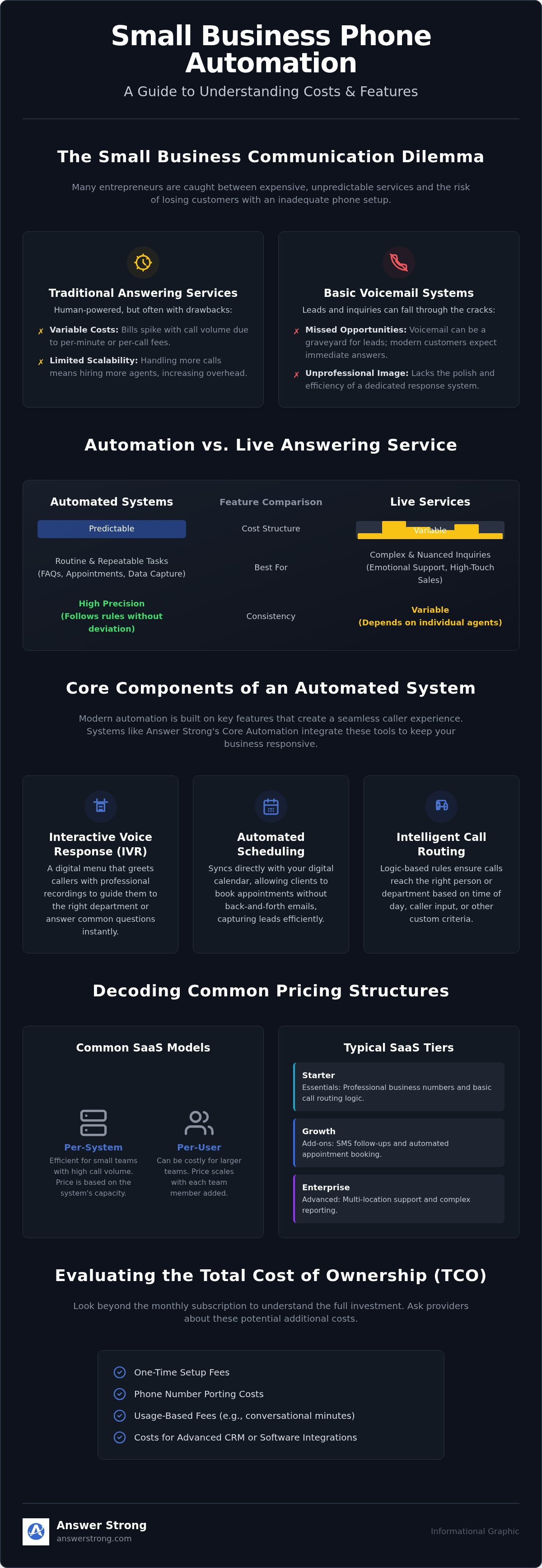
Choosing between software and a live answering service often depends on cost consistency. Traditional services usually charge per call or per minute. These variable costs make it difficult to predict your monthly expenses. If a marketing campaign goes viral, your bill might skyrocket. SaaS models provide a more stable foundation. You get coverage without worrying about overtime pay or holiday shifts. While live staff can handle complex emotional nuances, automation excels at routine, repeatable tasks with high precision. It removes the risk of human error in data entry or message taking.
Core Components of an Automated System
A robust system relies on several key features to function as your "invisible motor." These components work together to ensure a seamless caller experience. Most small business phone automation pricing plans include these essentials as part of their value proposition.
Interactive Voice Response (IVR): This is the digital menu that greets callers. It uses professional recordings to guide people to the right department or answer common questions.
Automated Appointment Scheduling: Systems can sync directly with your digital calendar. This allows clients to book time without a back-and-forth email chain.
Intelligent Call Routing: Logic-based rules ensure calls reach the right person at the right time. You can set after-hours calls to go to a specific recording or a mobile device.
Implementing these tools through a service like Core Automation ensures your business stays responsive. It removes the stress of missed opportunities. You gain a system that stays alert while you focus on high-level strategy. This creates a predictable environment where growth feels manageable rather than overwhelming.
Common Pricing Structures for Automated Phone Systems
Understanding how vendors structure their fees is vital for your bottom line. Most providers use a SaaS (Software as a Service) model. This offers a predictable base cost. However, small business phone automation pricing often splits into two camps: per-user and per-system models. If you have a large team but simple needs, per-user fees can quickly erode your margin. A per-system approach is usually more efficient for small teams handling a high volume of inquiries. It focuses on the infrastructure rather than the headcount.
The base plan usually covers the software license and access to the dashboard. Advanced features like CRM integrations or custom logic often sit behind higher price tiers. You need to identify which features are "must-haves" for your daily operations. Paying for a massive suite of enterprise tools is a common mistake that leads to bloated monthly bills. Focus on the core components that drive lead capture and customer satisfaction.
Tiered SaaS Subscription Models
Tiered plans allow you to match your spending to your current stage of growth. Starter levels, like the Starter Plan, typically focus on essential features. These include professional business numbers and basic routing logic. As your needs evolve, growth tiers add sophisticated tools. You might integrate SMS follow-ups or automated appointment booking to capture leads faster. Enterprise levels are reserved for multi-location businesses that require advanced reporting and complex logic across several regions. This structure ensures you don't pay for enterprise-grade features while you're still building your local presence.
Usage and Minute-Based Add-ons
Your monthly invoice is often a combination of a base fee and usage charges. Providers often use "conversational minutes" to measure the work the system performs. This is the time the automation spends interacting with a caller before a handoff or resolution. In high-demand industries like landscaping or HVAC, call volume isn't static. A single weather event can trigger a surge in inquiries. It's critical to choose a provider that offers transparent minute tracking. This prevents unexpected bills when your business is at its busiest. Managing these overages effectively turns a variable expense into a manageable part of your operational budget.
The real value of these structures lies in the labor they replace. If an automated system handles 100 routine FAQ calls per month, it saves dozens of hours of staff time. This allows your team to focus on high-ticket sales rather than repetitive data entry. You can explore how Conversational Core Minutes provide the flexibility needed to handle these surges without the overhead of additional staff.
Evaluating the Total Cost of Ownership (TCO)
The monthly subscription is just the visible tip of the iceberg. True small business phone automation pricing includes one-time implementation and recurring regulatory fees. Complex workflows require careful setup to ensure they sync with tools like Outlook or Google Calendar. If your system isn't integrated, you're just creating more manual work. You need a setup that connects your inbound calls to your existing tech stack without constant friction. This ensures your data flows where it needs to go without human intervention.
Keeping your existing business number is non-negotiable for most owners. While many providers handle the technical side, some may charge for number porting. Implementation fees also vary depending on the complexity of your logic. A simple greeting is easy. A multi-branch scheduling system requires more engineering. These upfront costs are investments in a system that eventually runs itself. They are part of the broader small business phone automation pricing landscape you must navigate to avoid surprises.
Hidden Costs to Watch For
Regulatory requirements have changed the landscape of business communication. Carrier registration fees for 10DLC compliance are now a standard part of using SMS. These aren't platform fees. They are passed through from the carriers to ensure your messages aren't flagged as spam. You should also check for transcription and call recording storage fees. If your business records every interaction, those data costs can grow over time. Some companies also offer premium support or concierge setup charges. These are useful if you want a turnkey solution but add to the initial TCO.
Calculating ROI Beyond the Subscription
The real math of automation focuses on what happens when you don't answer. A single missed lead in a high-ticket industry can cost thousands in lost revenue. Compare that to the steady cost of a platform. You're buying responsiveness. You can see the impact of automated task reduction on your weekly schedule. It often saves business owners 10 hours or more by removing administrative friction. This shift toward 24/7 responsiveness directly impacts customer lifetime value. Clients stay longer when they know they can reach you at any hour. This stability turns a cost into a growth engine for your enterprise. It creates a predictable environment where you can scale without hiring more staff.
How to Choose a Plan Based on Your Business Needs
Choosing the right plan requires a clear audit of your daily operations. You aren't just buying software; you're buying hours back for your team. Start by tracking your monthly call volume and identifying your peak hours. If you're a local contractor, these peaks usually happen in the morning or immediately following a weather event. Small business phone automation pricing becomes much clearer when you know exactly how many conversational minutes you need to cover these surges. It prevents you from overpaying for capacity you only use twice a year.
Look for tasks that humans shouldn't be doing. Answering questions about your hours or location costs significant money when a live person handles it. Automation manages these approved, repeatable tasks instantly. You must decide where the automation ends and human touch begins. High-touch escalation ensures that complex sales inquiries still reach a real person. This hybrid approach keeps your budget in check while maintaining high customer satisfaction. It allows your staff to focus on high-value work instead of basic data entry.
Recommendations for Solopreneurs
Solopreneurs have unique needs. You often use a single cell phone for everything, which makes it hard to unplug. You should prioritize missed-call text back features. This ensures that if you're on a job, the caller gets an immediate response. You can integrate this into a 24/7 virtual receptionist setup. It separates your personal and business lines without requiring a second physical device. It's a low-overhead way to appear larger and more professional than you are while protecting your personal time.
Requirements for Growing Service Teams
Growing service teams need more coordination. You need department-based routing and seamless team transfers. If a caller needs support, they shouldn't have to hang up and redial a different number. You can achieve a professional phone setup for existing lines by layering automation over your current carrier. This allows you to use a centralized dashboard to monitor responsiveness across the whole team. It turns a chaotic phone line into a structured lead management engine. You gain visibility into how many calls are handled and how many require follow-up.
Ready to build a more responsive business? Discover how Answer Strong can help you automate your routine workflows today.
Building a Stronger Communication System with Answer Strong
Answer Strong provides the robust infrastructure needed to scale your operations without adding unnecessary headcount. It isn't just about answering calls. It's about building a reliable system that manages itself. A centralized dashboard acts as your primary command center. From here, you can track every interaction, review activity logs, and adjust your communication settings in real-time. This level of granular control is essential for maintaining a professional image while you're busy on-site or in high-stakes meetings. Small business phone automation pricing should be viewed as a strategic investment in this operational stability. It removes the daily stress associated with rapid growth. You can finally stop worrying about what happens when your phone rings while you're in the middle of a job.
Our platform is designed to be the "invisible motor" that drives your business forward. You get a professional setup that reflects your brand's authority without the complexity of traditional enterprise systems. By automating the background processes, you ensure that no lead is left waiting. This consistency builds trust with your clients. It shows them that your business is organized, responsive, and ready to handle their needs at any hour. You gain the freedom to grow at your own pace.
The Power of Core Automation
The engine behind this efficiency is Core Automation. It handles the approved, repeatable tasks that usually interrupt your productive hours. Think about how many times you answer the same basic questions about your service area, hours, or general pricing. Core Automation takes care of these FAQ responses and lead captures automatically. It even schedules appointments based on your specific business rules and calendar availability. This allows you to focus on high-value field work while the system handles the administrative heavy lifting in the background. You stay productive. Your customers stay informed. It is a win-win for everyone involved in the process. The system remains alert so you don't have to.
Getting Started with the Right Plan
Flexibility is key for any growing company. You don't need expensive physical hardware or a complex office setup to look professional. You can start with a simple phone service and scale your features as your customer base expands. Our Essential Plan offers the perfect balance for companies that are ready to move beyond basic voicemail and into true automation. When a call requires a human touch, the system uses intelligent routing to direct the inquiry to the right staff member immediately. This ensures that complex issues get the attention they deserve without overwhelming your team with routine inquiries. You can explore the full range of service options at AnswerStrong.com to see which tier fits your current call volume. Small business phone automation pricing adapts to your journey, not the other way around. You gain a partner that grows alongside your business. Success requires constant responsiveness. We provide the tools to make that responsiveness a permanent part of your brand identity.
Take Control of Your Communication Budget
Predictable growth depends on a system that works while you sleep. You've seen how small business phone automation pricing shifts from variable, per-minute stress to a stable SaaS model. By evaluating your total cost of ownership and focusing on repeatable tasks, you turn a communication expense into a competitive edge. You don't need a massive team to stay responsive. You need the right logic in place.
Answer Strong provides this foundation. You can manage your entire setup through the portal.answerstrong.com dashboard. Whether you're starting with the Essential Plan for 24/7 coverage or deploying Core Automation's workflow engine to handle complex bookings, you're building a business that stays alert. This setup removes the administrative burden from your shoulders. It allows you to focus on the high-level strategy that drives your revenue.
Find the Right AnswerStrong Setup for Your Business and experience the freedom of an automated workflow. You gain a reliable partner that scales alongside your ambitions. Your future growth starts with a more responsive system today.
Frequently Asked Questions
What is the average cost of a small business phone automation system?
Small business phone automation pricing depends on your specific feature needs and call volume. Most providers offer tiered SaaS subscriptions that include a base set of tools. You'll often see a monthly fee combined with usage charges for the time the system spends interacting with callers. It's best to visit AnswerStrong.com to see the most current service options for your business size.
Do I have to pay extra for a toll-free or local business number?
Standard business phone numbers are often included in base plans, but specific requirements can change the total cost. Toll-free numbers or specific local area codes may involve additional carrier registration fees. You should also verify current carrier requirements for toll-free number registration to ensure your business stays compliant with modern communication regulations and avoids delivery issues.
Are there hidden fees for appointment booking or lead capture?
Transparent providers include appointment booking and lead capture in their core feature sets. However, you should check if these interactions consume your monthly conversational minutes. While the feature itself might not have a separate fee, the time spent processing the booking is part of your system's total usage. High-volume businesses should audit their workflows to manage these costs effectively.
Can I use my existing business phone number with an automated system?
You can absolutely keep your current business identity. Most systems allow you to port your number to their platform or use intelligent routing to layer automation over your existing lines. This ensures your customers don't have to learn a new way to reach you while you gain the benefits of a professional automated greeting and lead management system.
Is automation more expensive than hiring a part-time receptionist?
Automation is typically a fraction of the cost of a part-time receptionist. A human employee requires a salary, training, and fixed hours. An automated system provides 24/7 responsiveness for a predictable monthly fee. It handles routine FAQ responses and bookings, which allows you to save your human resources for high-value sales calls that require emotional intelligence.
How do usage-based fees work for automated phone calls?
Usage-based fees are calculated using conversational minutes. This is the duration of time the automation spends actively helping a caller. Small business phone automation pricing usually includes a monthly allowance of these minutes. If your business experiences a seasonal surge, you'll pay a standard rate for any minutes used beyond your plan's initial limit.
Do I need to buy special hardware to use phone automation?
You don't need to purchase any physical desk phones or VoIP hardware. These systems are entirely software-based. You can manage your entire communication setup through a centralized dashboard. Calls can be routed to your existing mobile device or office line, which keeps your initial implementation costs low and your team mobile and responsive.
What happens if I exceed my monthly minute limit?
Your service won't cut off if you go over your limit. Most providers either bill for overages at a flat per-minute rate or allow you to purchase additional Conversational Core Minutes mid-cycle. This flexibility is vital for service industries that face unpredictable call volumes due to weather events or successful marketing campaigns. You can always check your dashboard to monitor usage.



Comments